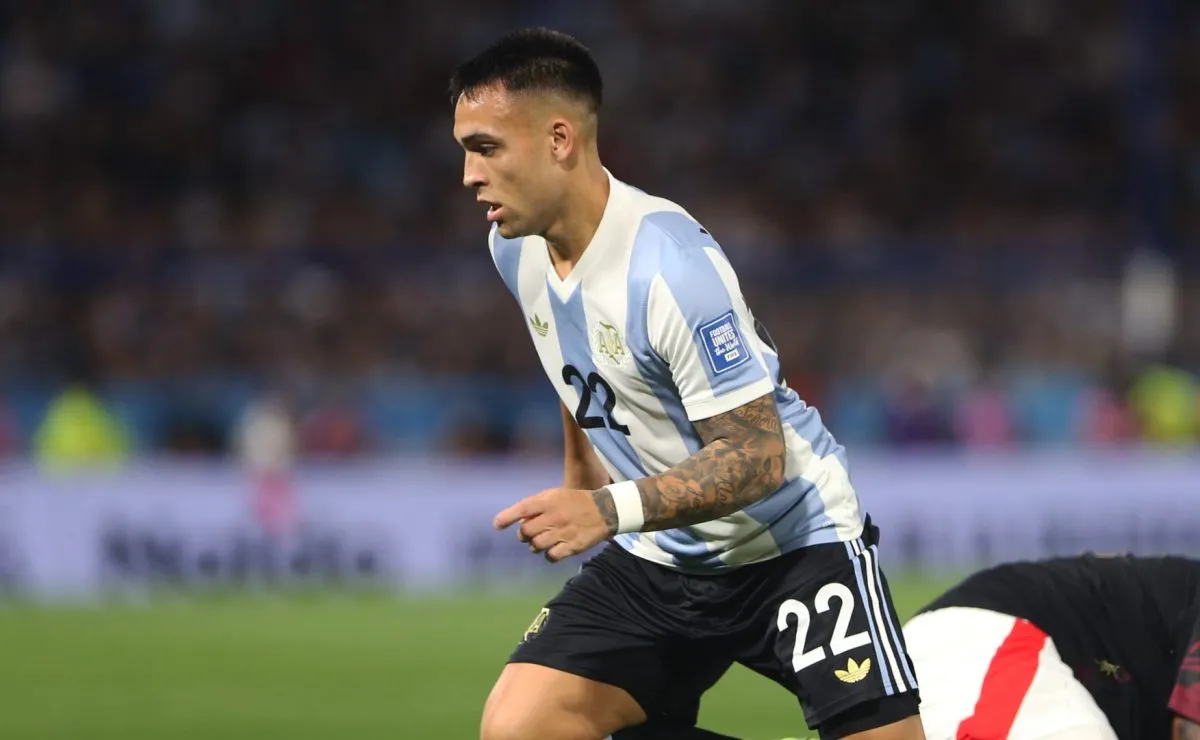
The Silent Striker: Decoding Lautaro Martínez's Absences and the Search for Replacements
Few sights are as disheartening for football fans as seeing a star player miss a crucial match. For supporters of both the Argentine national team and Inter Milan, this sentiment has often been tied to the absence of Lautaro Martínez. When the question "
por que no juega lautaro?" (why isn't Lautaro playing?) arises, it signals a significant tactical void that coaches Lionel Scaloni and Simone Inzaghi must contend with. Martínez, affectionately known as 'El Toro,' is more than just a goalscorer; he's a tireless worker, a pressing machine, and often the focal point of his teams' attacks. His occasional unavailability, whether due to injury or tactical preservation, forces a profound rethinking of strategy and highlights the importance of squad depth. This article delves into the various reasons behind his absences and meticulously analyzes the solutions both Argentina and Inter have deployed or could consider to maintain their competitive edge.
The Recurring Enigma: por que no juega lautaro?
Lautaro Martínez's value is undeniable. A World Cup winner with Argentina and a Serie A champion with Inter, his presence guarantees intensity, link-up play, and a keen eye for goal. However, the demanding schedules of elite football often take their toll, leading to moments when he’s unavailable. The reasons behind these absences are varied, ranging from tactical decisions to more serious physical setbacks, each with its own ripple effect on team dynamics.
One of the most common factors behind Lautaro's missed matches is
muscle fatigue. This was notably the case ahead of significant fixtures for both club and country. For instance, prior to a crucial World Cup Qualifier against Uruguay, Argentina's coach Lionel Scaloni made the executive decision to preserve Martínez. Arriving with signs of muscular fatigue, the coaching staff opted not to risk him, understanding the long-term implications for a player who is indispensable over an entire season. Similarly, Inter Milan faced a similar predicament in a high-stakes UEFA Champions League clash against Manchester City. Despite being available from the bench, Lautaro did not start, again due to muscular fatigue from recent training sessions, showcasing a cautious approach from coach Simone Inzaghi.
Beyond fatigue, specific injuries can also sideline the prolific striker. A significant example from the past involved a
soleus muscle strain in his left leg. This injury kept him out for an estimated 15 days, missing a vital Champions League playoff return leg against Bodø/Glimt. This type of injury, affecting a deep calf muscle, can be particularly nagging and requires careful recovery to prevent recurrence. Such absences underscore the fragility even of top athletes and the constant battle against the physical demands of the game. For more detailed insights into the causes and impacts of his physical setbacks, you might find these articles helpful:
Lautaro Martínez Out: Muscle Fatigue Behind Key Game Absences and
Lautaro Martínez's Injury: Solé Strain Sidelines Inter Star.
Argentina's Striking Dilemma: Filling El Toro's Boots
When Lautaro Martínez is unavailable for Argentina, particularly in critical matches like World Cup Qualifiers, Lionel Scaloni faces a complex challenge. Martínez is often the preferred central striker, offering a unique blend of hold-up play, relentless pressing, and clinical finishing. His absence forces Scaloni to consider not just who replaces him, but how the entire attacking structure might need to adapt.
In the aforementioned World Cup Qualifier against Uruguay, with Lautaro sidelined due to muscle fatigue, the mantle fell to
Julián Álvarez. The Manchester City forward stepped in as the lone striker, becoming the focal point of Argentina's attack. Álvarez, known for his incredible work rate, intelligent movement, and poacher's instinct, presents a different profile to Martínez. While both are agile and have an eye for goal, Álvarez’s game often involves dropping deeper to link play and making incisive runs behind defenses, perhaps less of a traditional target man than Lautaro.
Scaloni's tactical response for that match, without Martínez, illustrated this adaptation. The proposed lineup, featuring Emiliano Martínez; Molina, Romero, Otamendi, Tagliafico; Almada, Fernández, MacAllister, González; Simeone and Álvarez, indicated a versatile midfield with strong wide players supporting Álvarez. This setup often means the midfield is tasked with providing more offensive thrust and the wide attackers, like Nico González or even a player like Ángel Di María (if present), taking on increased goalscoring responsibility. Other potential replacements in the Albiceleste squad include players like Giovanni Simeone, who offers a more direct, powerful approach, or even considering creative solutions with Lionel Messi operating in a false nine role, though this is less common with a dedicated striker available. The key for Argentina is leveraging the depth of their attacking talent, ensuring that whoever steps in can maintain the team's relentless offensive pressure and clinical edge.
Inter's Attacking Pivot: Navigating Lautaro's Absences
At Inter Milan, Lautaro Martínez is not only a key goalscorer but also the team captain, carrying significant leadership responsibilities. His absences, therefore, resonate deeply within Simone Inzaghi's squad, demanding immediate and effective solutions. Inter's tactical system often relies on a two-striker partnership, making the replacement of one half of that duo particularly critical.
The instance of Lautaro's soleus muscle strain, which kept him out of the Champions League playoff against Bodø/Glimt, was a severe blow. Missing their prolific forward and captain for such a crucial fixture – especially one where they needed to overturn a deficit – meant Inter's attack had to find new ways to penetrate. While the specific match mentioned (likely a youth or specific competition given Cristian Chivu's coaching role) might not have been the senior team's main Champions League campaign, the injury type itself highlights a common challenge. In the senior squad, without Martínez, Inzaghi often turns to other established forwards. Historically, players like Edin Džeko or Romelu Lukaku have stepped up. More recently, the likes of Marcus Thuram and Marko Arnautović are vital components of Inter's attacking arsenal.
When facing Manchester City in the UEFA Champions League, Lautaro was rested due to fatigue, starting on the bench. In such scenarios, Inzaghi has the luxury of calling upon alternative forwards to partner with the available striker. While the reference context mentioned Mehdi Taremi as a potential replacement profile, in reality, Inter has always had a strong contingent of strikers ready to step in. The strategic decision to keep Lautaro on the bench, ready to be introduced if absolutely necessary, showcases Inzaghi's pragmatic approach – balancing immediate need with long-term player welfare. This approach allows Inter to preserve their star for even bigger challenges while still fielding a formidable attack capable of competing at the highest level. The versatility of players like Thuram, who can play as a central striker or wide forward, provides Inzaghi with valuable tactical flexibility.
Beyond the Strikers: Tactical Shifts and Team Adaptations
The absence of a pivotal player like Lautaro Martínez isn't merely about finding a direct replacement. It often triggers a cascade of tactical adjustments across the entire team. Both Argentina and Inter Milan operate within well-defined systems, and when 'El Toro' is out, coaches Scaloni and Inzaghi must consider how the team's overall balance, pressing intensity, and attacking fluidity will be affected.
One common adaptation is a shift in the *midfield's role*. With a less dominant central striker, midfielders might be encouraged to make more forward runs, get into the box, and contribute more directly to goal scoring. Players like Enzo Fernández or Alexis Mac Allister for Argentina, or Nicolò Barella and Hakan Çalhanoğlu for Inter, become even more critical in terms of offensive output and creating chances.
*
Wing Play Emphasis: Teams might lean more heavily on their wide players to create opportunities, either through crosses or by cutting inside to shoot. Argentina has players like Nico González and Ángel Di María who excel in this, while Inter relies on their attacking wing-backs in a 3-5-2 system to provide width and deliver dangerous balls.
*
Pressing Scheme Adjustments: Lautaro's relentless work rate in pressing from the front is a hallmark of his game. Without him, the responsibility for initiating the press and harassing defenders shifts to the new striker and supporting attackers. This requires clear communication and synchronized effort to maintain defensive solidity from the front.
*
Set-Piece Strategy: In tight games, set pieces become even more vital. Without a key aerial threat or someone drawing attention in the box, strategies around corners and free-kicks might need to be refined to capitalize on other players' strengths.
For coaches, managing these absences means fostering a culture of adaptability and ensuring that every player understands multiple roles. For fantasy football managers or keen analysts, understanding these potential tactical shifts is key to predicting team performance. Squad depth, therefore, isn't just about having substitutes; it's about having versatile players who can step into different systems and maintain high performance levels, allowing both Argentina and Inter to navigate the challenges posed by the question, "
por que no juega lautaro?"
In conclusion, Lautaro Martínez's recurring absences, whether due to muscle fatigue or specific injuries like a soleus strain, represent significant challenges for both Argentina and Inter Milan. His pivotal role as a goalscorer, presser, and often captain means his unavailability forces coaches Lionel Scaloni and Simone Inzaghi to rethink their strategies. While direct replacements like Julián Álvarez for Argentina or a host of formidable forwards for Inter provide immediate solutions, the true strength lies in the team's ability to adapt tactically, with midfielders stepping up, wing-play emphasized, and collective pressing maintained. These instances underscore the brutal demands of modern football and the absolute necessity of robust squad planning to overcome the temporary loss of even the most indispensable stars.